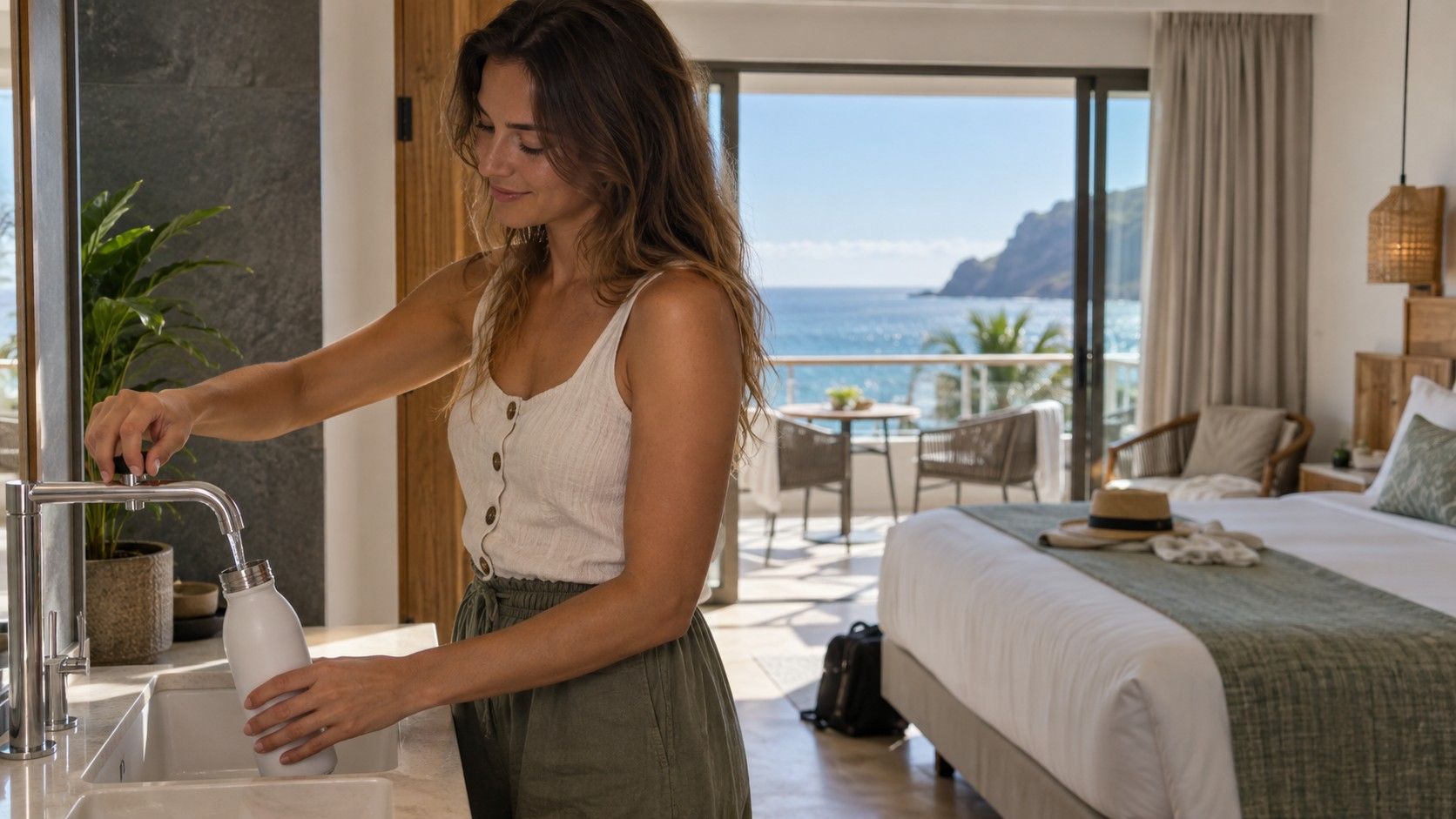
Is the water safe to drink in Tenerife? In ordinary visitor terms, the question has two parts that get muddled together: whether the supply is treated for drinking, and whether you will enjoy the taste or feel comfortable using it as your main water. A hotel-room tap can answer the first question more reassuringly than the second, so it helps to make a small practical choice rather than follow a blanket rule.
Safety and taste are different questions
Public tap water is supplied as drinking water, but visitors often describe it as tasting different from the water they use at home. That difference is not by itself a warning sign. Mineral content, the local water source, pipework and the temperature of water sitting in a building can all affect flavour. A mouthful that tastes slightly mineral, chlorinated or salty is unpleasant to some people and perfectly tolerable to others.
I would avoid promises that any water will suit every traveller. A sensitive stomach, very young child, medical dietary requirement, or a rental with questionable plumbing are reasons to use bottled water or ask the host for clear guidance. For most holiday decisions, the useful question is narrower: will you drink this tap water happily for a week, use it for tea, brush teeth with it, or keep a separate bottle for cold drinking water?
Why the flavour can surprise visitors
Tenerife is an island with limited natural freshwater compared with a rainy mainland region, and desalinated water is part of the wider supply picture. That context helps explain why a visitor may notice a different mineral balance or a faint saline edge. It does not mean every tap on the island tastes the same. Water in a newer south-coast hotel, an older apartment in Los Cristianos and a house in a northern town can each feel different.
Temperature changes perception too. Water drawn from a tap in a warm apartment block may seem flatter than the same water chilled for a few hours. If you are trying it for the first time, run the cold tap briefly, use a clean glass, and taste a small amount rather than judging from water that has been standing overnight. That simple check is more informative than an argument based on an online review from another resort.
Hotel room or private rental: inspect the setup
In a hotel, reception can usually say whether guests commonly drink from the tap, whether filtered water is available, and where to find a drinking-water point. The answer may be practical rather than technical, which is fine. Ask where staff themselves fill a bottle and whether the room has a labelled filtered-water tap. A minibar bottle is convenient on arrival, but it is not a long-term plan if you are trying to manage cost and plastic.
In a private rental, look at the property rather than assuming it matches the neighbouring hotel. Check whether the host mentions a filter jug, water dispenser or supplied drinking water; examine the tap and sink for obvious cleanliness; and let cold water run if the property has been empty. If the water looks cloudy after settling, smells unusual, or the plumbing seems poorly maintained, contact the host and use bottled water until you have a clear answer.
| Use | Practical choice | Reasonable check |
|---|---|---|
| Brushing teeth | Most visitors use tap water. | Use the normal cold tap in a well-kept hotel or rental. |
| Drinking all day | Choose tap, filtered or bottled based on taste and your needs. | Taste a chilled glass first; ask reception or the host if unsure. |
| Making tea or coffee | Tap water is commonly used, though flavour may affect the drink. | Use fresh cold water rather than water left in a kettle. |
| Ice in a bar | Usually treat it as part of normal food service. | Choose a clean, established venue and use ordinary judgement. |
When bottled water is the easier choice
Bottled water can remove a minor holiday annoyance when the tap water flavour is putting you off drinking enough. That matters after a hot walk in Costa Adeje, a long day at Siam Park, or an excursion where you start slightly dehydrated. Buy enough for the room, not a stack of tiny bottles for every outing. Larger bottles, a reusable bottle, and a planned refill point usually make more sense than repeatedly paying for convenience-store singles.
It is also a sensible temporary choice when you have arrived late and do not yet know the building, when a host has advised against drinking from the tap, or when you need water with a particular mineral profile. Read labels if you are choosing still versus sparkling water; the colour of the cap is not a reliable universal guide. Keep opened bottles out of direct sun and do not leave them rolling around in a hot hire car for days.
Ice, salads and the travel-stomach worry
People sometimes reject tap water but then worry about every ice cube and washed salad. That can create more anxiety than useful caution. In a normal hotel, restaurant or cafe, ice and food preparation are part of the venue's routine hygiene. Choose places that look clean, handle food properly and have a steady flow of customers. The same basic judgement applies in Tenerife as it does anywhere else.
A stomach upset during travel has many possible causes: a change in meal times, rich food, alcohol, heat, poor sleep, a virus, or a particular ingredient. It is rarely possible to identify the tap water from symptoms alone. If someone becomes seriously unwell, cannot keep fluids down, has severe symptoms or is a vulnerable traveller, seek medical advice. A holiday forum cannot make that decision for you.
Refilling without creating unnecessary waste
If the tap water tastes fine to you, a reusable bottle is the simplest option. Fill it with cold water in the morning, keep it out of direct sunlight, and wash it properly rather than endlessly topping up a bottle that has been in a beach bag. For water you prefer colder, fill a larger bottle in the room and chill it overnight, then pour into a smaller insulated bottle before leaving.
If taste is the issue, a filter jug can be useful in a self-catering apartment, but only if the host maintains it and you follow the cartridge instructions. Do not assume any unlabelled dispenser is filtered. The practical Tenerife solution is modest: taste the tap, ask one local source that knows the building, buy bottled water when that is more comfortable, and keep drinking regularly in the heat. It is better than treating one answer as a guarantee for every hotel room on the island.