A Tenerife black sand beach changes the mechanics of a beach day before it changes the photograph. The volcanic grains hold heat, show salt marks on a dark towel, and often sit on coasts where the Atlantic has more say than a resort brochure. I enjoy them most when they are treated as part of a town walk or road trip, with shoes, water and a second plan if the surf makes swimming unsuitable.
Volcanic sand changes the texture of the day, not just the colour in pictures
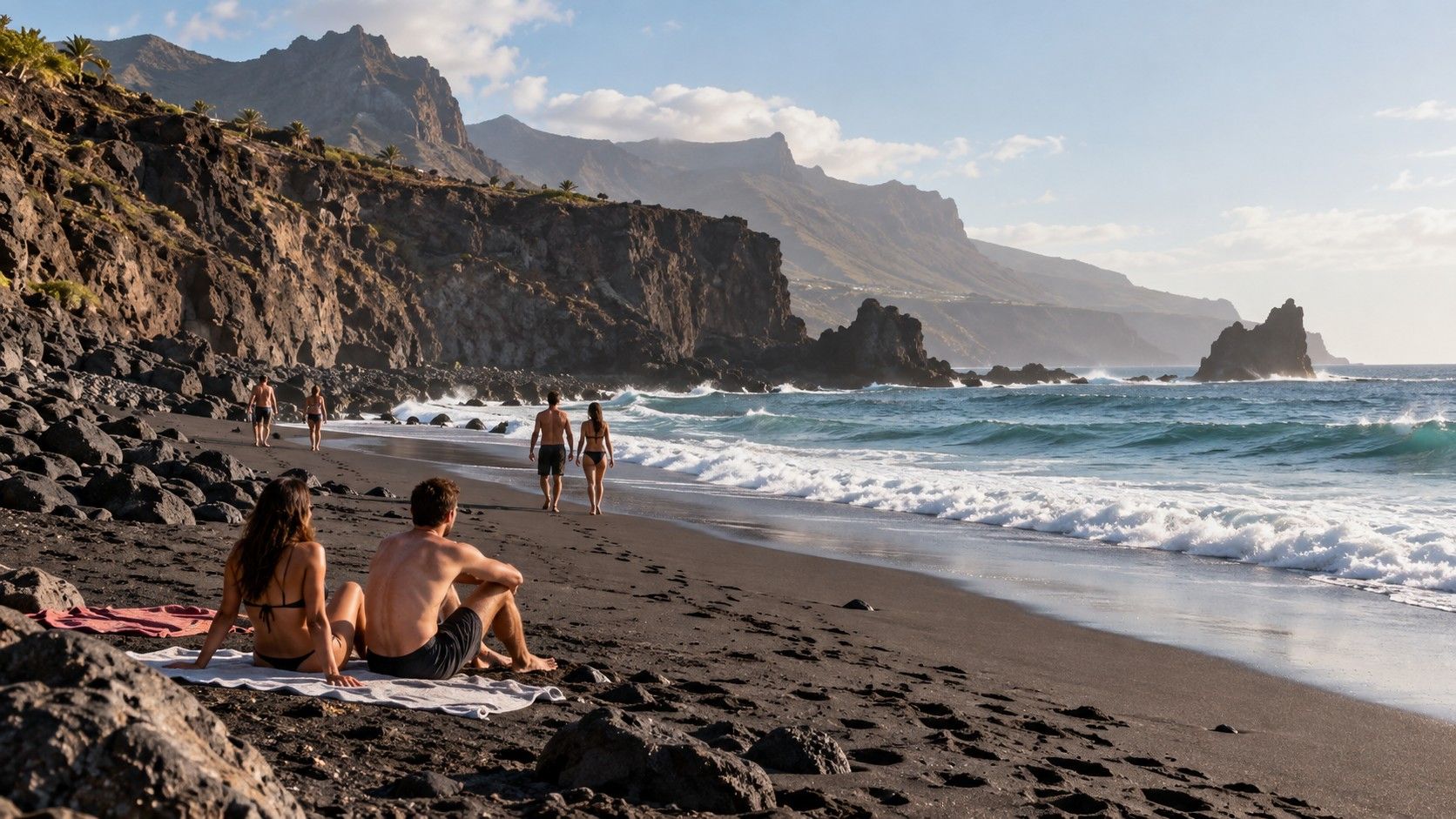
Black sand comes from Tenerife’s volcanic geology, and it feels different underfoot from the pale, imported-looking sand found on parts of the southern coast. It can be coarser, it sticks in shoes, and a wet patch turns a deep charcoal colour. On a bright day it produces a strong contrast with white foam and painted harbour buildings. That is appealing, but it is not an argument that every black-sand beach is comfortable for every visitor. A parent carrying a small child, or someone who wants to lie directly on the ground for hours, may prefer a softer and more sheltered setting.
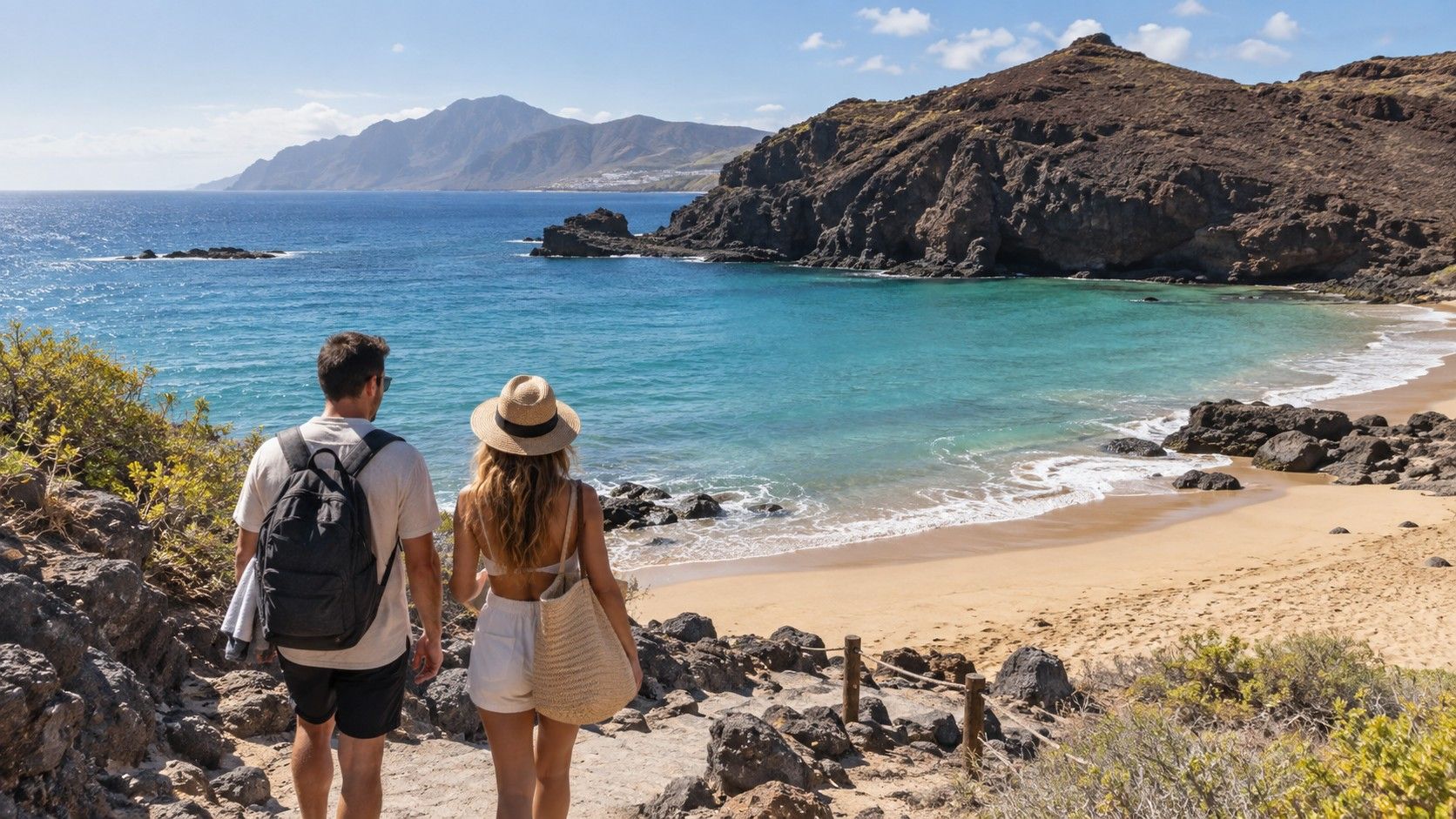
The real character of the coast matters more than a colour label. Some black-sand beaches sit beside proper towns, with cafés, toilets and easy exits; others are more exposed sections of shoreline reached after a winding drive. Playa Jardín in Puerto de la Cruz offers a town-based example, while smaller northern and western beaches can feel more isolated. The useful first check is not whether the sand looks dramatic. It is whether there is shade, how far the car is, and what the sea is doing when you arrive.
Heat and footwear are small details until midday makes them decisive
Dark sand can become uncomfortable in direct sun. The difference is most obvious between late morning and mid-afternoon, when a short barefoot walk from towel to water becomes a hurried shuffle. Water shoes or simple sandals are worth carrying even if you do not normally use them at the beach. They also help where the transition into the sea includes pebbles or uneven volcanic rock. Put them in the day bag, not in the boot, because the moment you need them is usually after you have already parked a distance away.
A darker towel hides some marks but makes it harder to see bits of sand and debris; a lighter towel makes the volcanic grains very visible. Neither choice is important enough to overthink, though a thicker mat is welcome on coarser sand. Pack water, sun protection, a hat and a cover-up for the walk back. Shade can be scarce outside the built-up beaches, and the northern sky may look milder than the sun feels once clouds clear. A small routine avoids turning an attractive stop into a hot, scratchy hour.
| Situation | What helps | What to avoid assuming |
|---|---|---|
| Hot open sand | Sandals, water and a thicker mat | That bare feet will be comfortable all afternoon |
| Town black-sand beach | Use nearby services and check flags | That facilities make the sea automatically calm |
| Road-trip cove | Bring food, shade and a dry layer | That shops or lifeguards are close by |
| Atlantic swell | Watch the water and follow local advice | That colour tells you anything about safety |
Sea conditions matter more than sand colour
Black sand is often discussed as if it identifies one type of beach. It does not. Tenerife’s north coast and parts of the west can receive more open Atlantic swell than sheltered southern bays, so the water may look impressive while being poor for a casual swim. The shoreline can change rapidly with wave height, and the most forceful part is frequently where the water meets the beach. Respect flags, barriers and local instructions. A clear blue sky does not cancel a red flag, and a few people standing near the edge do not prove it is a good day to enter.
For travellers whose priority is a relaxed swim, a black-sand stop can be the scenic half of the day rather than the swimming half. Walk, have a coffee, take the coastal view in, then use a hotel pool or a more protected beach later. That approach is especially sensible with children or anyone unsure on their feet in waves. It also stops the common disappointment of arriving at a striking beach and feeling obliged to make it work. There is no prize for getting wet when the conditions are telling you to stay on land.
Across the Canary Islands, the shared geology does not produce identical beach days
Black sand beaches in the Canary Islands are often grouped together, but each island presents a different mix of wind, shoreline shape and development. Tenerife combines volcanic sands with big variations in altitude and exposure over a relatively short distance. A beach day in Puerto de la Cruz may start under cloud and end in sun; a southern resort can be warmer and calmer at the same time. The contrast is one reason to carry layers and make loose plans rather than judge the island by one morning forecast.
On Tenerife, town beaches such as those around Puerto de la Cruz can fit naturally into a day with gardens, shops and lunch. More remote places ask for a car and a more deliberate timetable. Golden sand elsewhere on the island can be imported or naturally lighter; it may be softer, but it still shares the same Atlantic weather. The useful distinction is therefore not black versus gold as good versus bad. It is sheltered versus exposed, serviced versus remote, and suitable for your group versus better admired from the shore.
Build a black-sand stop into a road day with an exit plan
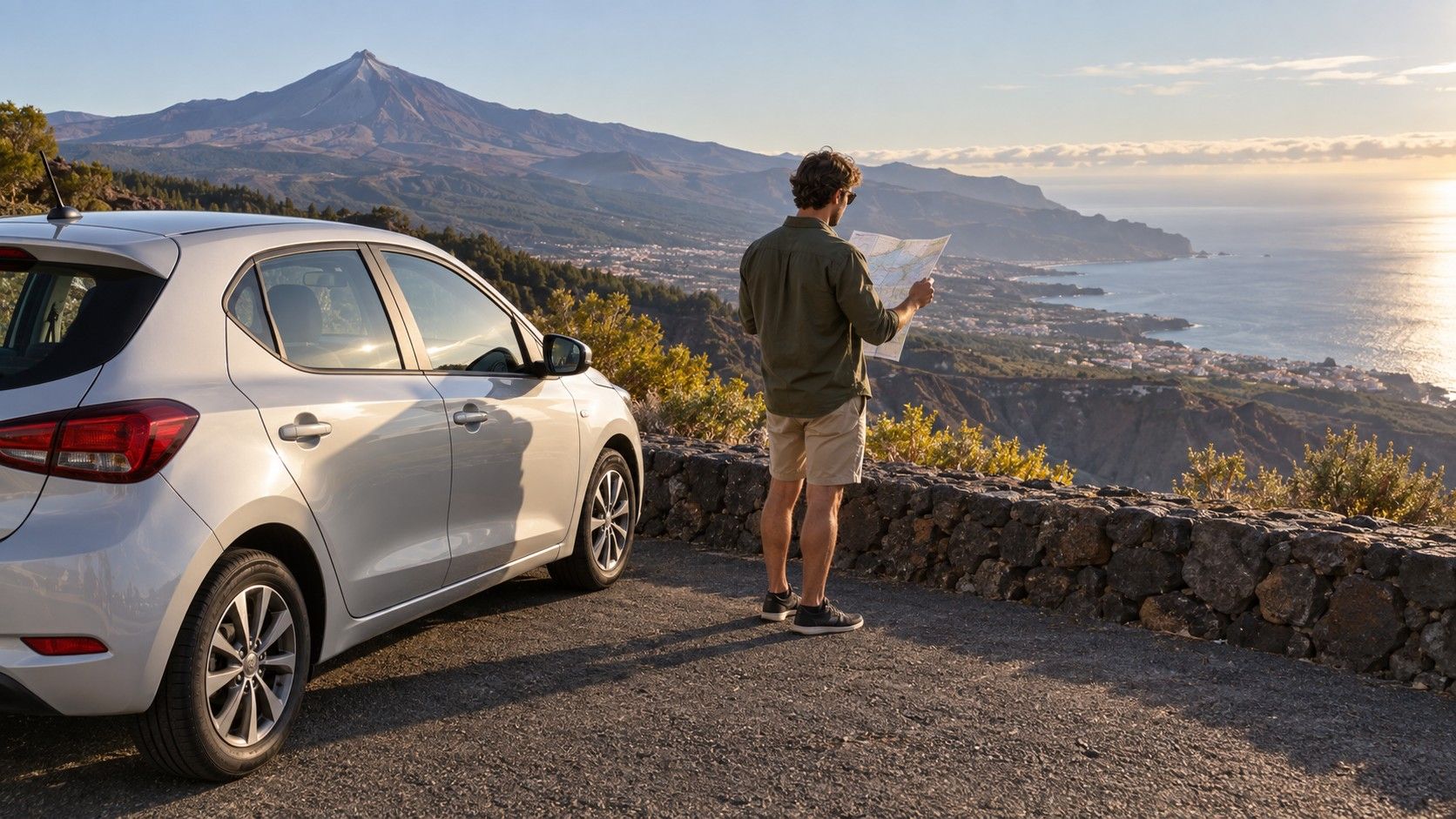
When driving from the south, allow more time than a map suggests for mountain or north-coast roads, and avoid booking the beach as the only fixed event. Arrive before the hottest part of the day if you want an unhurried look for parking and shade. Keep a towel, shoes, drinking water and a dry top in the car. A short visit can be satisfying: stroll the sand, look at the sea from a safe distance, eat in the nearby town and decide honestly whether swimming is appealing.
Before leaving, rinse off sand where facilities allow and change out of a wet costume. That makes the return drive much more pleasant, particularly if the next stop involves uphill walking or a restaurant. A Tenerife black sand beach rewards a slightly more practical mood than a resort sunbed day. Take the colour seriously enough to bring footwear, take the sea seriously enough to change plans, and leave room for the surrounding town or coast. Then the stop feels like a real part of the island rather than a box checked for a photograph.