Collecting a rental after a Tenerife flight is a small task that becomes tiring when it is left until the arrivals hall. A PlusCar Tenerife South Airport booking is best treated as a short handover, not a holiday formality: have the right documents, know the booking reference, and leave enough attention for the vehicle itself. The aim is not to rush through it, but to avoid discovering a missing detail when the queue is moving and everyone is carrying bags.
Put the documents together before the plane lands
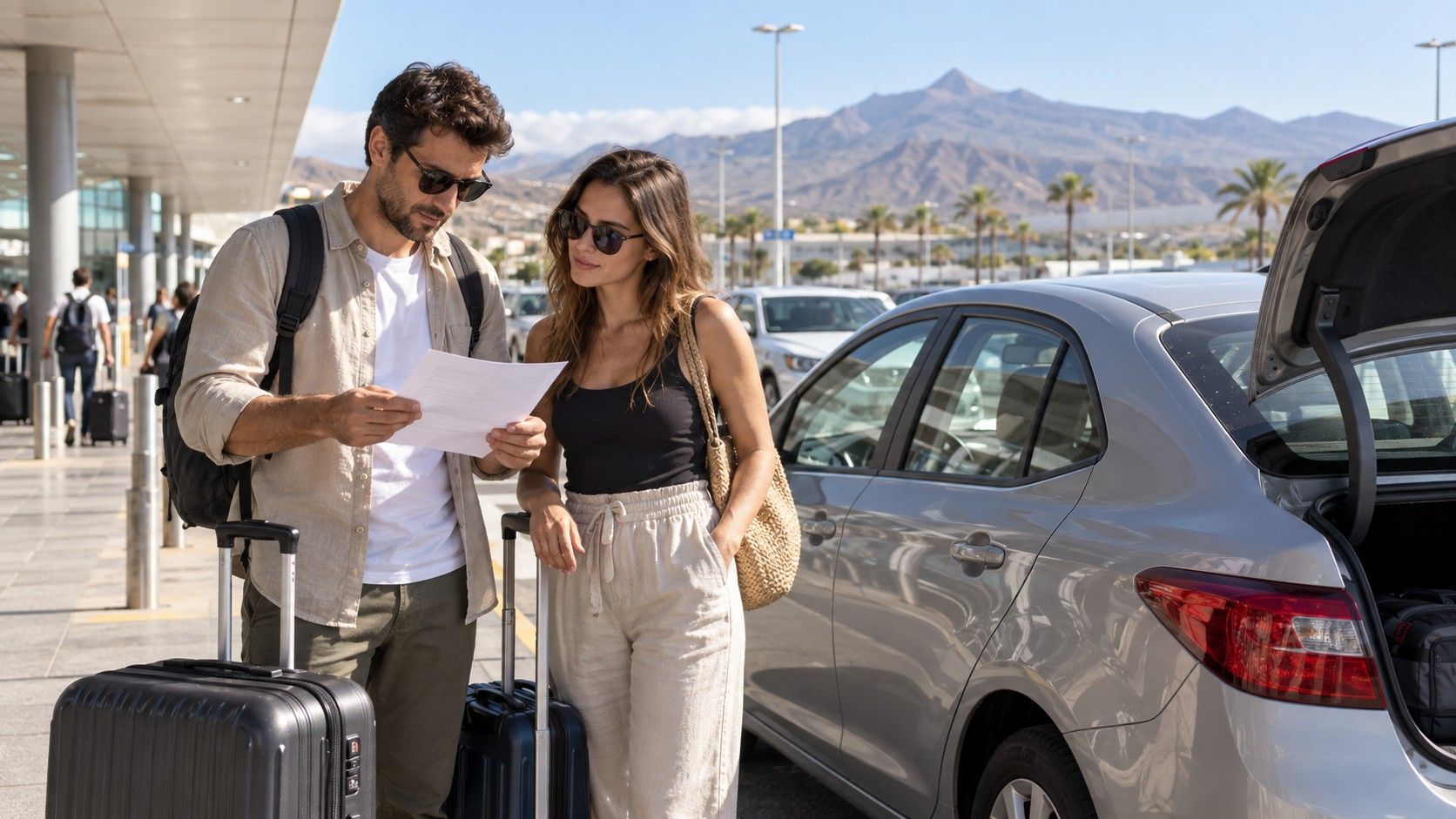
Keep the driving licence, booking confirmation and a payment card or other item requested in the booking conditions in one accessible place. A screenshot saved on the phone is useful when airport Wi-Fi is slow, but it is worth carrying the original licence rather than assuming a photo will do. Check the driver name on the voucher before departure. If another adult expects to drive during the stay, establish in advance whether that person must be present at collection and what identification is required.
Read the confirmation once with a pencil-in-the-margin mindset. Look for the collection instructions, the stated fuel arrangement, any age or licence requirements, and the procedure if the flight is delayed. Those details can change between bookings, so this is not a claim about a permanent PlusCar Tenerife South process. It is simply the information that prevents an awkward discussion while children, suitcases and a late-evening arrival compete for attention.
Put the accommodation address in your phone in a form that can be copied into navigation. A hotel name alone can be vague, particularly where a resort has several entrances or a complex sits above the coast road. Save a second version with the municipality or postcode if you have it. The first drive is much calmer when the passenger is not searching through confirmation emails at the airport exit.
Keep the first half-hour after arrival deliberately simple
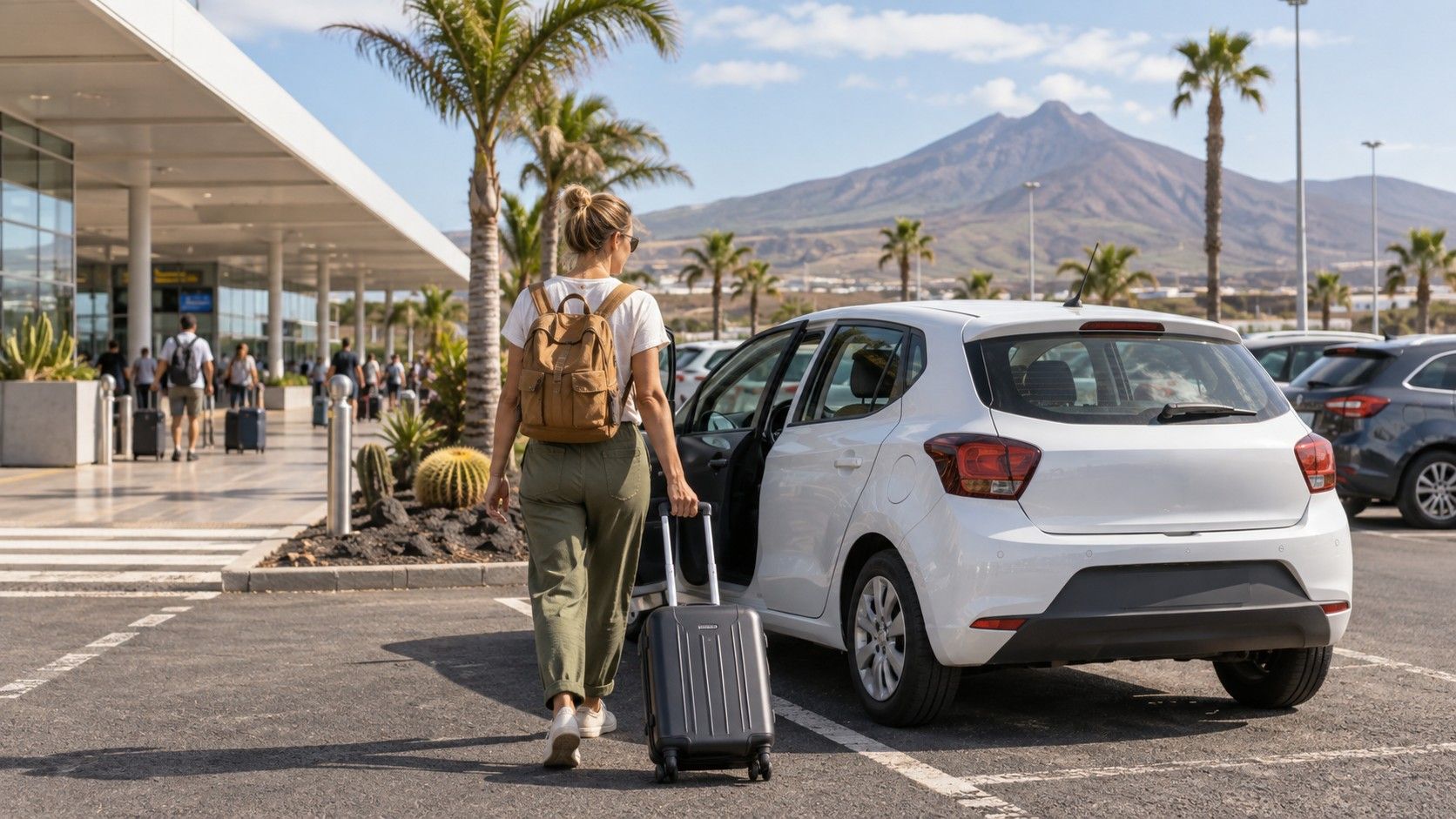
After baggage reclaim, take a moment to count bags and charge levels before looking for the collection point described in the booking. Airport layouts, desks and parking arrangements are operational details, so follow the current voucher rather than a blog post or a memory from a previous trip. If your flight has arrived late, use the contact method provided by the company rather than assuming that a delay has been noticed automatically.
A useful division of labour is mundane but effective. One person deals with the handover while another stays with the luggage and checks that passports, jackets and small electronics have not been left in a tray or trolley. If you are travelling alone, consolidate the bags first. Trying to sign paperwork while a suitcase is rolling away is a poor start to a week that was meant to reduce stress.
Ask concise questions only where the answer affects the next few hours: how the key handover works, what to do if a warning light appears, what fuel level is expected on return, and which contact route is appropriate outside normal hours. Avoid trying to resolve every hypothetical dispute at the desk. The booking terms matter, but the immediate job is to leave with an understood vehicle and a clear route.
| Before leaving the airport | Why it matters |
|---|---|
| Licence and booking details match the named driver | Avoids a preventable collection delay |
| Accommodation address is saved offline | Reduces navigation decisions on the first drive |
| Fuel and return expectations are noted | Prevents a vague memory becoming a charge dispute |
| Current contact method is saved | Useful if a flight delay or vehicle issue interrupts the plan |
Do a vehicle check while the car park is still calm
The vehicle check is not a performance for the rental agent; it is your own record of what you received. Walk around the car before loading it. Look at bumpers, wheel edges, windscreen, roof if practical, door panels and the inside of the boot. Take wide photographs that show the whole side, then closer shots of marks that are already present. A short video can be helpful, although still images are easier to find later.
Inside, check the fuel gauge, warning lights, air conditioning, lights, mirrors and the basic controls you will use at night. If the car has an unfamiliar automatic gearbox, ask how reverse and park are selected before rolling into airport traffic. Confirm that the boot fits the luggage with the rear seats in the position you need. None of this requires distrust; it gives both sides a shared starting point.
Do not delay the collection over tiny cosmetic marks that are already recorded, but do raise a point that is unclear. A cracked lamp, a tyre that looks underinflated, a missing parcel shelf or a dashboard warning deserves an answer. Keep copies of any amended condition record. The best outcome is boring: you leave knowing the car is suitable, and the return inspection has nothing surprising to compare.
Leave Tenerife South without turning the first drive into a test
Airport roads can feel busy after a long flight, especially when several arrivals release traffic at once. Set navigation before moving, adjust mirrors and take a minute to understand the indicators and wipers. Tenerife roads range from broad southern motorways to steep, narrow routes away from the coast. The sensible first goal is the accommodation, not a scenic detour to prove that the car was worth hiring.
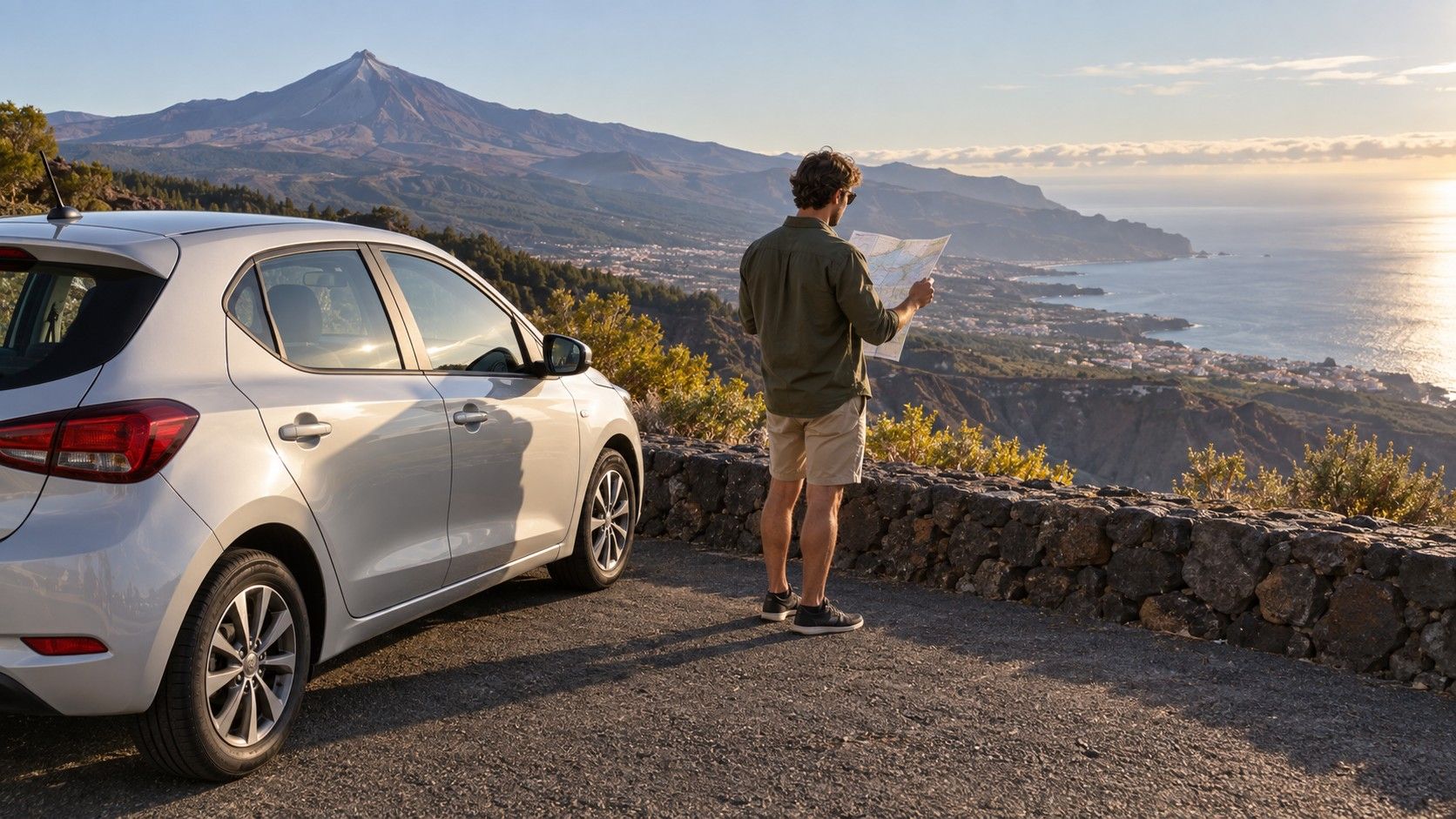
If you are heading to Golf del Sur, Costa Adeje, Los Cristianos or Playa de las Americas, the airport departure is usually a different kind of drive from a later excursion toward Teide or the north. Do not judge the whole island from the first easy stretch. Mountain routes demand more attention, and a compact vehicle may feel very different with four adults and luggage on a climb. Check local restrictions and parking rules when you arrive rather than improvising in a hotel entrance.
Make a quick note of where you parked at the accommodation and whether the gate, key fob or reception procedure affects late returns. A car can save time on Tenerife, but only if each move does not begin with searching for it. On the first evening, a short walk and food nearby are often a better decision than adding an unfamiliar drive after dark.
Plan the return while the collection is fresh in your mind
The return route is easier to solve on day one than on departure morning. Save the location and instructions provided for return, then look at the journey from your accommodation at the time you expect to travel. Allow for fuel, luggage unloading, a wrong exit and the walk back into the terminal. The extra margin is less about dramatic traffic predictions than about making ordinary interruptions harmless.
Keep fuel receipts and the condition photos until the hire is completely closed. If the agreed fuel level is not full, photograph the gauge at collection and return. Before handing over keys, empty the door pockets, glove box and charging points. Sunglasses, toll tickets, charging cables and a child’s toy are easy to miss because they do not look important until the aircraft door closes.
A PlusCar Tenerife South collection goes smoothly when it is handled as a sequence of small checks: documents, current instructions, vehicle record, saved destination and return plan. That approach does not depend on a promised desk location or a fixed queue time. It gives you a practical way to deal with the parts of car hire that are within your control, leaving more space for the island itself.